What is the Internet?
To some of us, the internet can mean their local broadband providers, or the underground wires and fiber-optic cables that carry data back and forth across cities and oceans. Toothers it is where we stay in touch with friends, get the news, shop, and play games.

Cloud Computing
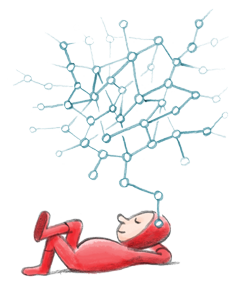
Modern computing in the age of the Internet is quite strange. As you are using your computer, you're actually plugging into the collective power of thousands of computers that serve all this information to you from far-away rooms distrubuted around the world. This phenomenon is called cloud computing. The movement of many of our daily tasks online enable us to live more fully in the real world. Cloud computing also allows our data to migrate beyond boundaries of our hardware function and onto the cloud. This allows you to access your files from any computer anywhere whenever you want or need to.

If you play online games, use an online photo editor, or rely on web-based services like:
- Google Maps
- Social Meida:
- Youtube
- Amazon
Then you're an active resident in the wonderful world of webpages. Applications, or apps, are also called programs or software. They've been designed to do broad, intensive taks like accounting or word processing. Web apps, in particular, run these taks inside the web browsers and often provide a rich, interactive experience. All the information you need is pulled into the web app dynamically everytime you ask for it. This brings us to four virtues of Web Appiness:
- I can access my data fom anywhere.
- I'll always get the latest versiion of any app.
- It works on every device with a web browser.
- It's safer.
HTML, Javascript, CSS and More
Web pages are written in HTML, the web programming language that tells web browsers how to structure and present content on a web page. The idea of such dynamic web pages began with the invention of the scripting language Javascript. But the dynamic web know it today truly came to life when XHR (XNLHttpRequest) was introduced into javascript, and first used in web application like Microsoft Outlook for the Web, Gmail, and Google Maps. Web pages have also become more expressive with the introduction of CSS (Cascading Style Sheets). CSS gives programmers an easy, efficent way to define a web page's layout and beautify the page with design elements like colors, rounded corners, gradients, and animation.

Definitons